
Loading...
Serving St. Cloud, FL and surrounding areas. (689) 214-9340
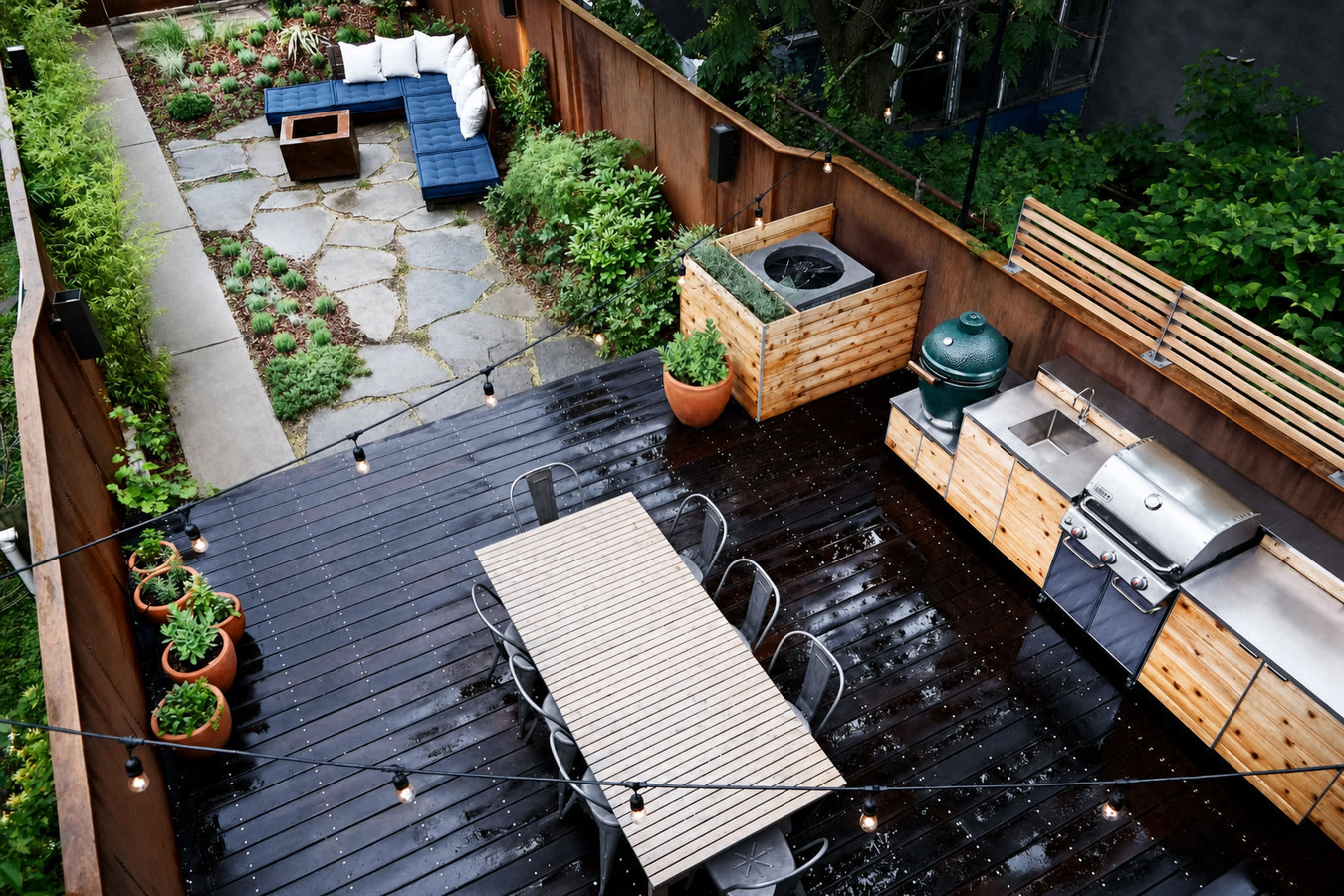
Your indoor kitchen moved outside. We build deck platforms with grill stations, counter space, and built-in appliances - all permitted through Osceola County and built for Florida weather.
Outdoor kitchen decks in St. Cloud combine a raised or ground-level deck platform with a built-in cooking and entertaining area, most projects take two to six weeks from the first day of work to the final walkthrough depending on size and complexity.
Think of it as your indoor kitchen moved outside: a grill station, counter space, maybe a sink or mini-fridge, all set on a sturdy deck designed to carry the weight of appliances and stone or tile surfaces without shifting over time. The deck and kitchen are designed together from the start so the structure can handle everything sitting on top of it. A lot of St. Cloud homeowners have a portable grill on a concrete slab and call that their outdoor kitchen - an outdoor kitchen deck is the real version of that idea.
If you are already working with a custom deck design, adding an outdoor kitchen area during the original build is almost always less expensive than retrofitting one later. The framing, footings, and utility rough-ins can all be planned together from the beginning, and you end up with a finished space that looks like it was always supposed to be there.
If outdoor entertaining means a portable grill on a concrete slab with no shade and nowhere to set a drink, you are not really using your backyard. St. Cloud's mild winters and warm spring evenings are genuinely pleasant - the kind of weather that makes outdoor living worth investing in.
Walk your deck and press down firmly near the posts and along the edges. If boards feel soft, spongy, or give under pressure, the wood has absorbed moisture and begun to decay - a common problem in Florida's humid climate. Rebuilding it as an outdoor kitchen deck is often a smarter investment than patching.
St. Cloud's rainy season brings heavy, fast-moving storms that can leave standing water in low-lying yards. A raised deck structure elevates your entertaining space above the wet ground and allows water to drain underneath. A good deck builder positions the structure to work with your yard's natural slope.
If you are grilling within a few feet of your home's siding, a wood fence, or an overhang, that is a fire risk. A properly designed outdoor kitchen deck positions the grill at a safe distance from combustible surfaces with the right clearances built into the structure from day one.
Every outdoor kitchen deck starts with the deck platform - the structure you walk on. We build those in pressure-treated wood, composite decking, and porcelain tile, each suited to different budgets and maintenance preferences. Composite decking resists Florida's UV exposure and humidity without annual sealing, which is why it has become the most common choice in this area. On top of the deck, the kitchen area is framed with steel studs or concrete block, then finished with tile, stone, or stucco on the outside. Built-in appliances - grills, side burners, refrigerators - are set into the frame and connected to gas lines or electrical circuits by licensed tradespeople. We coordinate those subcontracts and make sure everyone is licensed in Florida before they touch your property. If you want to add a multi-level deck layout, we can design the kitchen on one level and a seating area on another.
Shade is a common add-on for outdoor kitchens in this climate. We can integrate a pergola or covered roof structure into the original build so the cooking area stays comfortable even on summer afternoons. Sorting out shade, ceiling fans, and outdoor-rated lighting as part of the original design is less expensive and cleaner-looking than adding them after the fact. Every project includes a written scope, a detailed estimate, and a timeline that accounts for permit review and any HOA approval your neighborhood requires.
Best for homeowners who want a low-maintenance surface that holds up to Florida's heat, humidity, and UV exposure without annual sealing or staining.
A cost-effective starting point for homeowners comfortable with periodic maintenance - sealing or staining every one to two years in this climate.
A fixed grill set into a masonry or steel frame at the right clearance from your home, with counter space on either side for prep and serving.
Includes grill station, side burners, refrigerator, sink, and counter space - all designed together so appliances and utilities are properly coordinated.
Adds a shade structure over the cooking area as part of the original build, making the kitchen comfortable through more of the year in Central Florida.
Separates the cooking area from the seating area on different deck levels - a good option for yards with a slope or where the two zones need defined separation.
St. Cloud sits in Osceola County, where summer temperatures regularly push into the low-to-mid 90s and UV exposure is among the highest in the continental United States. Wood decking fades, warps, and splinters faster here than in cooler climates - which is why most experienced local contractors steer homeowners toward composite decking or porcelain tile for outdoor kitchen surfaces. The material choice you make upfront has a bigger long-term impact here than it would in a northern state. We also have to design around Central Florida's rainy season, which runs from June through September with afternoon storms arriving almost daily. Most of our heaviest outdoor work goes into the schedule from October through May, and weather delays are built into summer timelines honestly. If you want your outdoor kitchen deck ready for the holidays or for spring entertaining in Harmony or the neighborhoods nearby, starting the planning process in late summer gives you the best shot at an on-time finish.
Sandy, shifting soils are common throughout Osceola County, and they require footings that are dug deeper and wider than you would need in denser ground. A deck built with shallow footings in sandy soil can start to lean or bounce within a few years, especially after heavy rain events. We explain our footing plan for every job based on the actual conditions at your site. Many newer communities in Kissimmee and the surrounding area also have HOA architectural review boards that must approve any deck or outdoor kitchen before a county permit can even be submitted. We are familiar with this two-step process and handle both submissions so you are not caught off guard after a contract is signed. The North American Deck and Railing Association publishes industry guidelines for deck construction safety that inform how we approach every build.
When you reach out, we ask a few basic questions - how big a space you are thinking about, whether you want gas or electric appliances, and whether you have an HOA. We respond within one business day. You are not committing to anything at this stage, just figuring out if the project is a good fit.
We visit your backyard, take measurements, and talk through what you actually want - size, layout, appliances, shade options. We also check for things you might not think about, like where the gas line runs and whether your yard has any drainage issues. A written estimate follows that breaks down materials, labor, and permit costs.
Once you agree on a design and sign a contract, we submit the permit application to Osceola County's Building Division. If your neighborhood has an HOA, we prepare the documentation for their review. This step typically takes one to three weeks - we keep you updated on where things stand so there are no surprises.
Work starts with marking the footprint and digging post footings. After concrete cures, framing goes up, then decking boards, then the kitchen structure. Licensed subcontractors handle gas and electrical connections. Inspections happen at key stages. When everything is done, we walk through the finished space with you and hand over your permit sign-off documents.
Free on-site estimate. Written scope before any work starts. Permits and HOA submissions handled.
(689) 214-9340Sandy, shifting soils are the norm in this area, and we size and depth footings based on actual site conditions on every job. A deck built on properly engineered footings stays level and solid through years of Florida storms and rainy seasons - not just the first couple of summers.
We pull the Osceola County building permit and coordinate any required trade permits for gas and electrical work before construction begins. A county inspector - someone independent of our crew - signs off at key stages. That paper trail protects you at resale and keeps your homeowner's insurance valid.
We use composite decking, outdoor-rated hardware, and surface finishes that hold up to Florida's UV exposure and afternoon downpours. Choosing the right materials for this specific climate upfront means you are not resealing, repainting, or replacing surfaces every couple of years to keep things looking presentable.
Many of St. Cloud's newer communities require HOA architectural review before a county permit can even be submitted. We are familiar with that two-step process across the area's growing subdivisions. You can verify our contractor's license through the Florida Department of Business and Professional Regulation at{' '} myfloridalicense.com before we sign anything.
The things that matter most with an outdoor kitchen deck are all below the surface - the footings, the framing connections, and the permit trail that proves the work was done right. When those fundamentals are solid, the finished space holds its value and gives you years of use without calling someone back.
Add a second level to your outdoor kitchen build - separate the cooking zone from a dining or lounge area with a tiered deck designed for your yard's layout.
Learn MoreStart with a fully custom deck design before adding the kitchen elements - useful for complex lot shapes, large spaces, or homeowners with a specific layout in mind.
Learn MoreFall is the best time to build in St. Cloud - beat the summer rainy season and have your space ready for spring entertaining.